When shopping for a gaming PC, you’re faced with a few distinct options. You can go for a mass-produced prebuilt from major brands like Alienware, or splurge on an elite boutique build from the likes of Maingear or Falcon Northwest. The Origin Millennium sits comfortably in between these extremes. It’s a high-end custom gaming rig built with standard components—powerful, reliable, and without the extravagant design flair often seen in premium systems.
The Origin Millennium delivers solid performance and build quality without leaning into overly flashy aesthetics. It's essentially a top-tier system you could theoretically build yourself, minus the hassle of cable routing and component compatibility checks. However, be prepared to handle the logistics of receiving a large wooden crate if you opt for this model—it’s not exactly a lightweight package.
Purchasing Guide
Origin offers the Millennium starting at $2,788, though that base configuration includes an Intel Core i5-14600K and no dedicated graphics card—which is underwhelming for the price. Fortunately, the system is fully customizable through Origin’s website, allowing you to select your preferred hardware combination. Keep in mind, however, that as performance increases, so does the cost.
Origin Millennium – Photos
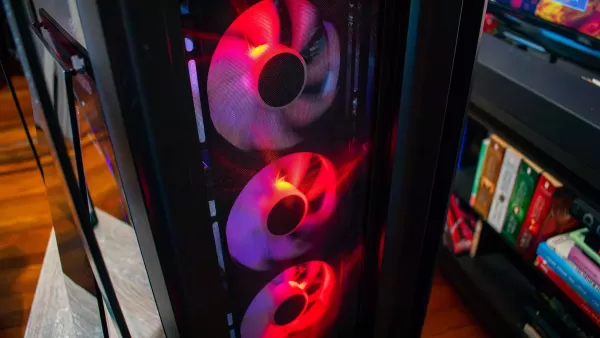
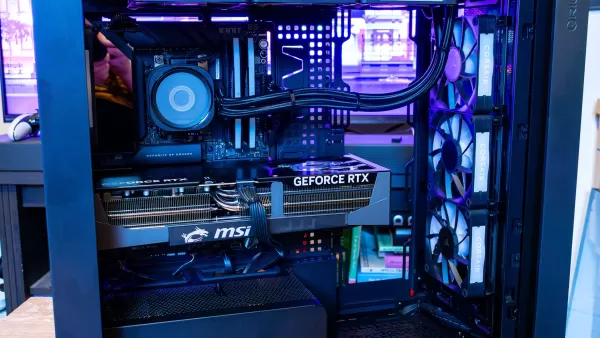
View 8 Images
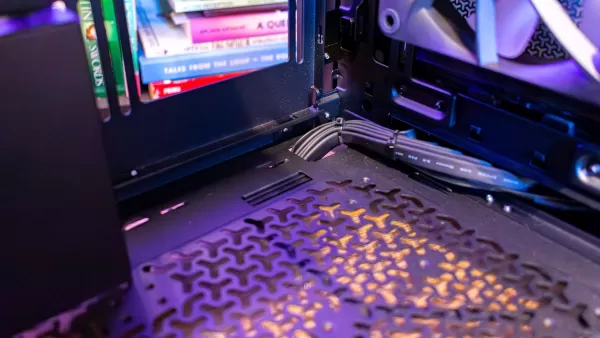

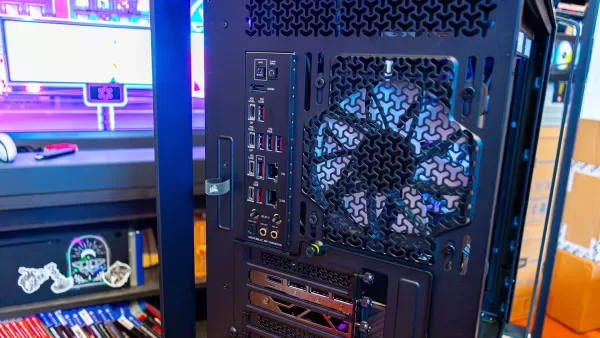
Design and Features
Make no mistake—the Origin Millennium is a large machine. Housed in a full-tower ATX case, it’s further reinforced with steel corner bars that make the unit even more imposing. The empty chassis alone weighs 33 pounds, and when packed with high-end components like the MSI RTX 5090 Gaming Trio, a powerful PSU, and a 360mm AIO cooler, it becomes quite a challenge to transport—especially up multiple flights of stairs.
The corner bars, while sturdy, do present a minor inconvenience when accessing the interior. Specifically, the back-left bar interferes with the removal of the glass side panel, making the first-time opening a slightly nerve-wracking experience. That said, the bars are removable via Allen bolts, giving users flexibility if frequent access is needed.
Inside, the system offers excellent space efficiency. Even with a massive 14-inch GPU installed, there's ample room for airflow and future upgrades. Origin has done an impressive job managing cables, tucking nearly all wiring neatly behind the motherboard tray and through designated grommets.
One notable design quirk involves the front intake fans: their power cables and front panel connectors run underneath the chassis rather than being routed internally. While this keeps the inside of the case tidy, it results in exposed external cabling—a trade-off that may raise eyebrows among some users.
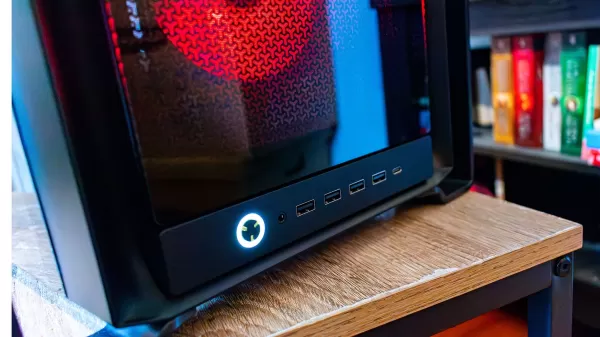
Front-panel I/O includes four USB-A ports and one USB-C port, with additional connectivity available on the rear panel. Depending on your configuration, you can choose whether the front I/O is mounted on the top or bottom of the case—ideal for either desk placement or floor-standing setups.
Equipped with the Asus ROG Crosshair X870E Hero motherboard, the test unit delivered a wealth of rear ports, including four USB-C, six USB-A, dual Ethernet, HDMI, and Display outputs. The RTX 5090 also provides three DisplayPort and one HDMI connection, standard for high-end GPUs.
All About the Configuration
While the exact system reviewed is undeniably overkill for most users, Origin allows full customization based on your budget and performance needs. For example, a mid-range configuration featuring an AMD Ryzen 5 9600X, 32GB RAM, and an AMD Radeon RX 9070 XT will set you back around $3,392. This setup still supports smooth 4K gaming but at a more accessible price point.
If you were to build that same mid-range system yourself, using off-the-shelf parts, you'd save roughly $1,000—bringing the total to approximately $2,397. Similarly, the flagship configuration tested would cost about $6,506 assembled manually, compared to the $7,241 retail price from Origin.
So why pay the premium? In addition to the convenience of a prebuilt system, Origin offers lifetime support and a standard one-year warranty. This means free technical assistance and even free labor for future upgrades (as long as you supply the new parts). And while the heavy-duty shipping crate adds weight and logistical complexity, it also ensures safe delivery.
Ultimately, whether this premium is worth it depends on your comfort level with building and maintaining PCs.
Performance
The review unit came equipped with an Nvidia GeForce RTX 5090, AMD Ryzen 7 9800X3D, and 64GB of RAM—making it a powerhouse for modern gaming. At 4K resolution, the system consistently delivered triple-digit frame rates across most titles, even without frame generation enabled.
Only two games fell short of the 100 FPS mark: Assassin’s Creed Shadows at 75 FPS and Metro Exodus at 97 FPS. The latter is expected given its ray tracing workload, which doesn’t support DLSS 3 upscaling. With frame generation enabled, Assassin’s Creed Shadows jumped to 132 FPS, albeit with a slight latency increase from 33ms to 42ms—still acceptable for most single-player experiences.
Cyberpunk 2077 performed exceptionally well too. Running at Ultra Ray Tracing settings with DLSS Performance mode, the system achieved 127 FPS at 23ms latency. Activating Multi-Frame Generation 4x boosted performance to an astonishing 373 FPS, with latency only rising to 28ms—well within playable range even on high-refresh displays.
In short, this configuration handles today’s most demanding games with ease, offering uncompromising visuals and performance.

 LATEST ARTICLES