








Игры
Более+
Новости
Более+
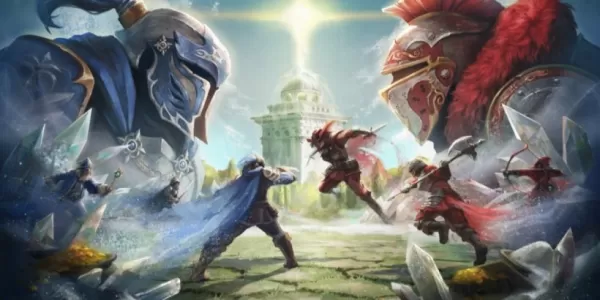
Hero Defense: Merge TD Redefines Genre With Deep Progression In an era where tower defense games often fall into repetitive patterns of minigun turrets and predictable wave cycles, Hero Defense: Merge TD emerges as a revolutionary force, seamlessly blending strategic depth, innovative mechanics, and addictive progression to redefine the genre entirely. At its core, Hero Defense: Merge TD takes the classic tower defense formula and turns it on its head. Instead of placing static towers, players merge hero units—each with unique abilities, elemental affinities, and evolving upgrades—into increasingly powerful forms. This merge mechanic introduces a compelling layer of long-term strategy, encouraging players to plan not just for the next wave, but for the next evolution. What truly sets the game apart is its deep progression system. Every hero begins as a basic unit, but through experience and strategic merging, they evolve into legendary guardians with complex abilities—like summoning area-of-effect storms, commanding elemental hordes, or turning the tide with sacrificial ultimates. The game’s progression isn’t just cosmetic; it fundamentally alters gameplay, rewarding long-term investment and thoughtful planning. The game also features dynamic environments that react to player choices. Terrain shifts, weather patterns change enemy behavior, and boss fights unfold across multiple phases—each demanding adaptable tactics. With over 200 unique heroes to collect and merge, hundreds of upgrade paths, and procedurally generated wave patterns, no two playthroughs ever feel the same. Praised by critics and fans alike, Hero Defense: Merge TD has been hailed as “a masterclass in genre reinvention” and “the most satisfying tower defense experience since the genre’s golden age.” Its blend of emotional player investment, strategic depth, and constant evolution creates a gaming experience that’s as rewarding as it is exhilarating. Whether you’re a veteran of the genre or a newcomer drawn in by its fresh take on classic mechanics, Hero Defense: Merge TD isn’t just another tower defense game—it’s the future of strategic defense gaming. 🔥 Now Available on iOS, Android, and PC. ⚡ Merge. Evolve. Conquer. The battle begins. May 06,2026
As of now, Stray Stranding 2: On the Beach is not an officially released or confirmed game. There is no official announcement from Kojima Productions, Sony Interactive Entertainment, or any major game publisher regarding a sequel to Stray Stranding—which itself is not a real game. However, your title appears to be a creative or speculative fusion of ideas, possibly inspired by: The real game Stray (2022) – a critically acclaimed indie title developed by Blue Forest Games, where you play as a cat navigating a mysterious, post-apocalyptic city. It has no connection to Hideo Kojima or The Last of Us. Hideo Kojima’s Stray Stranding – a fictional or conceptual name often jokingly or creatively used to refer to a rumored or imagined sequel to Death Stranding (2019), which was developed by Kojima Productions and released for PlayStation 4 and 5. So, if we interpret your question as a speculative or fan-driven "deep dive" into a hypothetical Death Stranding 2: On the Beach, here’s a thoughtful, imaginative analysis of what such a sequel might explore—drawing from the themes, tone, and world-building of the original: Death Stranding 2: On the Beach – A Hypothetical Deeper Look at Its Roots 1. Thematic Continuity: Reconnection in a Fractured World The original Death Stranding explored the fragile nature of connection—between people, between life and death, between isolation and community. On the Beach would likely double down on this theme, setting the story on a desolate, coastal region where the landmasses have been reshaped by the "Beach" phenomenon—a metaphysical, liminal space that blurs the boundaries between worlds. The "beach" becomes a symbolic and literal threshold: a place where the living and the dead intersect, where time is nonlinear, and where memory plays a central role in shaping reality. 2. The Role of the "Beach" as a Mythic Space Inspired by real-world coastal myths and liminal zones (like tidal flats, tide pools, or sacred shorelines), the "beach" in Death Stranding 2 could be portrayed as a sacred, almost dreamlike realm. It might be a manifestation of Sam Porter Bridges’ subconscious, a collective psychic residue of the dead, or a natural phenomenon tied to the planet’s emotional and spiritual core. This echoes real-world rituals and beliefs surrounding shorelines as places of transition—birth, death, purification. 3. Environmental Storytelling and Nature’s Resilience The game might emphasize ecological decay and rebirth, a theme subtly present in the first game through the Bone Walker’s connection to nature. On the Beach could explore how nature reclaims infrastructure, how flora and fauna adapt to the Stranding’s aftermath, and how humanity must learn to coexist—not conquer. Think of the beach as a living archive: footprints in sand that fade, waves that wash away messages, and strange bioluminescent lifeforms that appear only in the presence of "Beached" entities. 4. The Return of Key Characters – Or Their Echoes While the original game’s cast (like Amanda, Deadman, and the Bridges family) are largely gone, On the Beach might introduce new characters who are spiritually or genetically linked to the first game’s legacy—perhaps a descendant of Sam, a child of the Chiral, or a new "Bridge Baby" hybrid. Alternatively, it could focus on a new protagonist experiencing the same "connection" to the dead through dream logic and tactile transmission—emphasizing that the Stranding isn’t a singular event, but a recurring cycle of human fragility and resilience. 5. Gameplay Evolution: Tactile, Emotional, and Environmental Interaction The gameplay might expand on the original’s emphasis on carrying, building, and nurturing connections. New mechanics could include: Using tide patterns and seasonal shifts to time deliveries. Communicating with "beach spirits" through rhythmic tapping, like drumming on the sand. Building shelters that only last through certain phases of the moon. The "Beach" could be a static zone where time slows, and players must "listen" to the environment to unlock memories or solve puzzles. 6. Philosophical and Existential Undercurrents Drawing from Kojima’s known influences—Borges, Kurosawa, religious philosophy—On the Beach might grapple with questions like: Can we mourn without memory? Is connection possible across dimensions? Is death a destination, or just another form of presence? The beach becomes a meditation on impermanence, echoing Japanese aesthetics like wabi-sabi—beauty in decay, harmony in asymmetry. Final Thought: A Game Rooted in Longing Death Stranding 2: On the Beach—if it were real—would not be a simple sequel. It would be a continuation of Kojima’s lifelong fascination with the invisible threads that bind us: love, grief, fear, and hope. The beach is not just a setting; it’s a metaphor for all that lies between. It would ask: When the world ends, where do we go? Do we walk into the waves? Or do we wait—on the shore—for someone to call our name? ⚠️ Note: As of now, there is no official Death Stranding 2, nor any announcement for a game titled On the Beach. This analysis is speculative and inspired by fan imagination and the themes of Kojima’s original work. If you're writing a story, fan fiction, or concept art inspired by this idea—by all means, keep creating. The beach is calling. 🌊✨ Apr 08,2026
Программы
Более+
Темы
Более+
Рейтинг
Более+
Рейтинг программного обеспечения
Скачать
Обновлять:Jun 16,24
Скачать
Обновлять:Jul 15,23
Скачать
Обновлять:Dec 13,23
Скачать
Обновлять:Jan 10,25
Скачать
Обновлять:Jan 04,25