Application Description
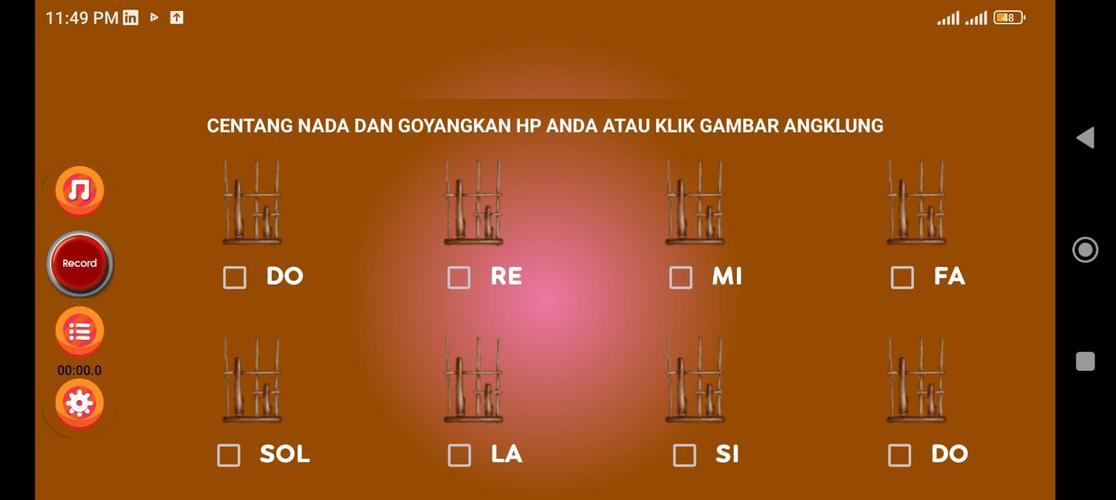
Angklung Traditional Musical Instrument
The term angklung originates from the Sundanese word "angkleung-angkleung," referring to the players' movements in rhythm. Meanwhile, "klung" describes the sound or note produced by the instrument.
Each note is created from bamboo tubes of varying sizes. When shaken, they produce a beautiful and pleasant melody. Therefore, to create a full composition, angklung is played collectively.
Angklung is typically crafted from black bamboo (Awi wulung) or ater bamboo (Awi temen), which turn yellowish-white when dried. The instrument is assembled by binding two to four bamboo tubes of different sizes together using rattan.
How to Play Angklung
Playing the angklung is relatively simple. Players hold the frame (the top part) and shake the bottom to produce sound. There are three basic techniques for playing angklung:
- Kerulung (Vibration)
This is the most common and fundamental technique. Both hands hold the base of the bamboo tubes, shaking them left and right repeatedly while playing a note.
- Centok (Thrust)
In this technique, the tube is quickly pulled by the fingers against the palm, causing the angklung to sound once, similar to a striking impact.
- Tengkep
In this technique, the player vibrates one tube while holding another to prevent it from resonating, resulting in only a single sound.
Types of Angklung
Throughout its history, various regions in Indonesia have developed new types of angklung. Below are some examples:
- Angklung Kanekes
Angklung Kanekes originates from the Baduy people and is performed only during rice planting ceremonies. The crafting of this angklung is done exclusively by members of the Baduy Dalam tribe.
- Angklung Reog
This type of angklung accompanies the Reog Ponorogo dance in East Java. It has distinct characteristics in shape and sound compared to standard angklung. The sound is louder and consists of only two notes. Angklung Reog is also often used as decoration and is known as klong kluk.
- Angklung Dogdog Lojor
Dogdog Lojor is a tradition honoring rice plants. This type of angklung is used only during traditional rituals, which are still practiced by the Kasepuhan Pancer Pangawinan community or the Banten Kidul traditional unit. The Banten Kidul people hold the Dogdog Lojor tradition annually.
There are only six players in the Dogdog Lojor tradition: two play the Dogdog Lojor angklung, while the other four play larger angklungs.
- Angklung Badeng
Originating from Garut, Angklung Badeng was initially used as accompaniment for rice planting rituals. With the spread of Islam in the past, its function shifted, and it became an accompaniment for religious preaching.
Nine angklungs are required to complete the preaching accompaniment. These consist of two roel angklungs, one kecer angklung, four indung angklungs, two anak angklungs, two dogdogs, and two gembyungs.
- Angklung Padaeng
This type of angklung was first introduced by Daeng Soetigna in 1938. He modified the tube structure to produce diatonic notes. As a result, this angklung can be played alongside popular and modern musical instruments.
Daeng Soetigna's vision was continued by Handiman Diratmasasmita, who aimed to make angklung usage comparable to international instruments.
Handiman continued producing diatonic angklung with further improvements. Besides Handiman Diratmasasmita, another key figure in popularizing angklung among the public is Udjo Ngalegena.
Music



 Download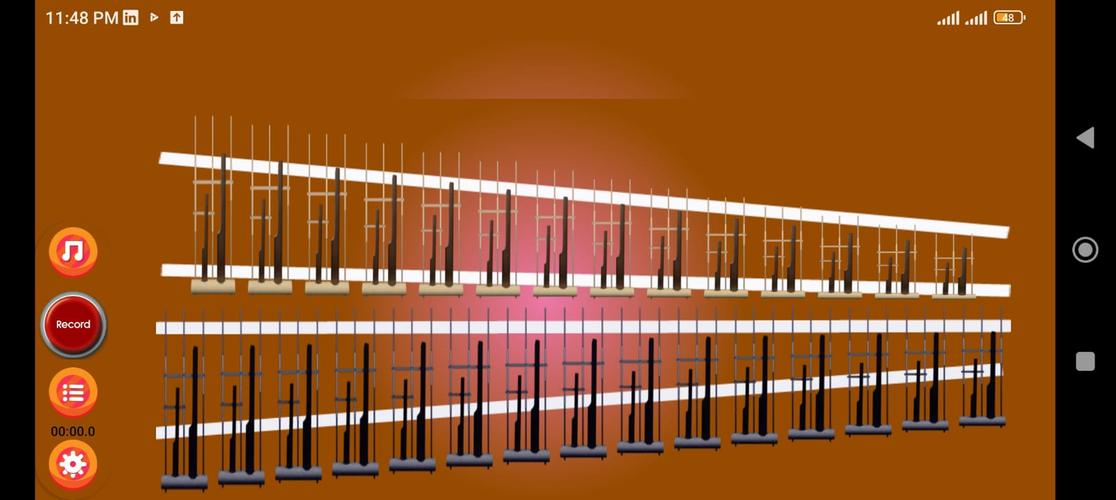

 Games like Angklung Instrument